

Most people think about replacing a missing tooth the way they’d think about fixing a gap in a fence, just look for something that fits and the issue is resolved. However, it’s not that simple. For each day that a tooth root is missing from the jaw, the bone below that space is slowly degrading, and the consequences extend further than just looks.
Table of Contents
What Tooth Loss Does To The Jaw That Nobody Talks About
The bone that holds in teeth is called the alveolar bone, and it’s in a constant state of biological negotiation. It grows and maintains its density only when it has mechanical force passed through it. That stimulation is provided by the periodontal ligament: the connective tissue that attaches each natural tooth root to the surrounding bone. When a tooth is lost, that stimulation comes to a screeching halt.
The body reads the alveolar bone as no longer necessary and begins to resorb it: in just the first year after extraction, patients can lose up to 25% of bone width in that area. Over the next several years, the vertical height of the bone starts shrinking, too. This is why long-term denture wearers get that sunken look around the lower part of their face. Adjacent teeth no longer have the lateral support the missing tooth provided and they start to drift or tip into the gap. Teeth on the opposing arch have nothing to bite against and they start to over-erupt. One missing tooth, left untreated, sets off a cascade of biting problems across your entire mouth.
“Doing nothing” doesn’t just maintain the status quo. It’s actually the fast track to losing even more teeth. It’s why the question in dentistry isn’t whether to replace a tooth. The real question is, which replacement stops the cascade.
The Biology Behind Implants, Why Osseointegration Changes The Equation
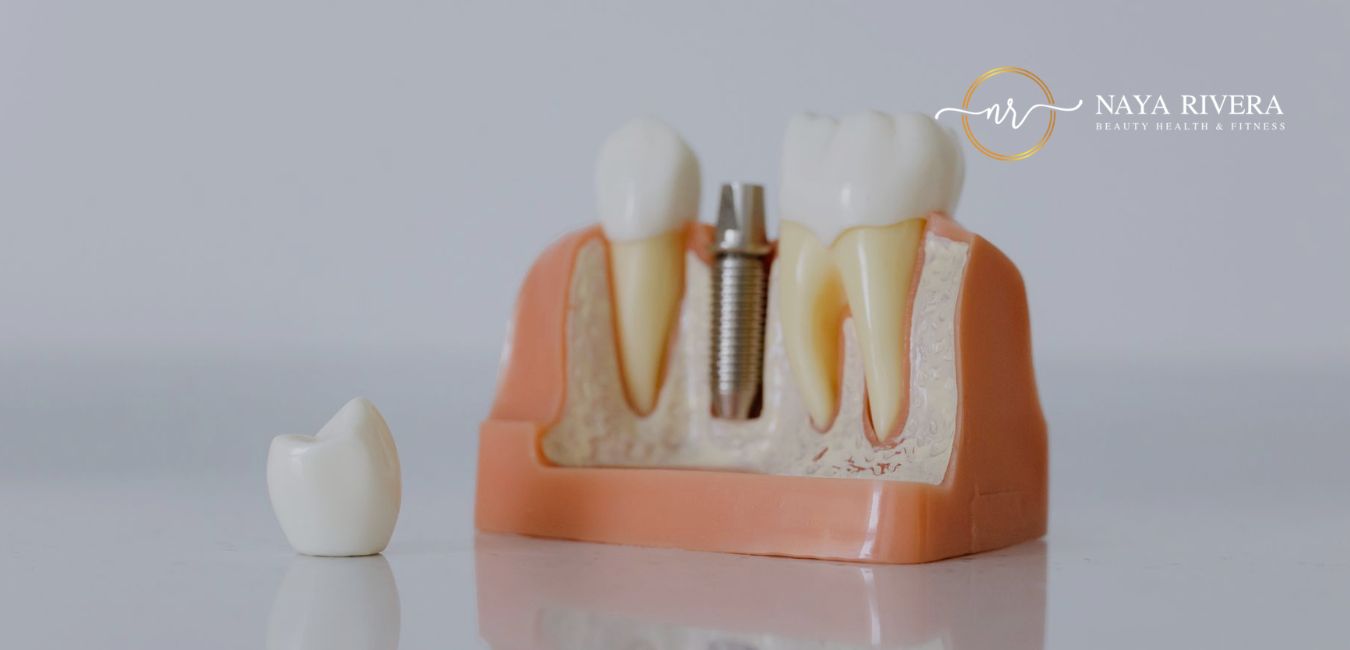
A dental implant is a titanium post inserted through the gums and into the jawbone, where it eventually fuses with the surrounding bone through a process called osseointegration. Titanium is not treated by the body as a foreign object, it integrates at the cellular level. This develops a bond structurally similar to a natural tooth root. The implant redirects biting force through the bone, and so the bone maintains its density, preventing the resorption pattern described earlier.
When osseointegration is done an abutment is installed on the upper part of the implant post. The abutment is the connector piece that supports the crown, the bridge, or other prosthesis above the gumline. The crown is frequently zirconia as a result of its strength and the extremely natural appearance. Though, the post is made from titanium and remains as the standard implant material.
Modern implant planning relies on CBCT, 3D X-rays displaying bone density, nerve location and sinus proximity with more accuracy than standard flat X-ray radiographs. This diagnostic step is what separates accurate, predictable implant placement from guesswork. Clinicians offering dental implants hawthorn use this kind of advanced imaging for mapping the entire surgical site before a single incision is made, which directly impacts both safety and long-term outcomes.
Implants placed by experienced hands will deliver about 90% of your natural chewing strength, which means no dietary restrictions for most patients, no messy adhesives, and nothing to remove before going to bed.
How Traditional Dental Bridges Work, And What They Cost The Neighboring Teeth
A traditional dental bridge is a fixed synthetic tooth that covers the space of a missing tooth. The artificial tooth in the middle, also known as the pontic, hangs between two crowns that are cemented on the adjacent teeth. These adjacent teeth are referred to as abutment teeth. In order to get filed down for the crowns to be attached, they need to remove 60-70% of their original structure, regardless of their condition before the procedure.
This is what most people consider a dental bridge. A lot of patients have them. And a lot of patients aren’t happy with them once they start to realize what they really signed up for. The technology was innovative at the time, and bridges have improved the quality of life for millions of patients over the years. But the cost, in natural tooth structure, in potential infection points, in loss of functionality, and in resorptive bone loss that ages the appearance of the whole face, is substantial and often understated.
If one or both of the abutment teeth have problems, the bridge is compromised. Decay, receding gums, infection, normal shifting, any stressor that affects one tooth is now affecting three.
The Real Story On Dentures: Material Advances And Persistent Limitations
Over time, newly-relined or well-fitting dentures will begin to loosen. Patients may start to rely on denture adhesive to secure them in place, a less-than-ideal solution that can lead to even more bone loss, since the adhesive will dampen the force transmitted to the bone with each bite. Loosening dentures can also cause rub points and sores on the gum, making the dentures painful to wear.
Despite these problems, plenty of people thrive on well-fitted, properly maintained dentures, and many more happily wear less-than-ideal ones because they’ve chosen to prioritize other things, cost, fear of surgery, or just a long habit of tolerating their current prosthetics. If you’re one of those, more power to you. But don’t kid yourself that it’s a worry-free, maintenance-free, no-downsides situation.
Candidacy, Bone Grafting, And Who Qualifies
Patients are most commonly informed that they may not be candidates for dental implants due to lack of sufficient bone volume, which often translates to years of resorption following tooth loss or wearing dentures. While “insufficient bone” is less likely to eliminate a patient from candidacy than it was a decade ago, bone grafting, and/or sinus lifts (a grafting procedure specific to the upper posterior jaw where the sinus cavity is located near the bone surface), which add the vertical space necessary to secure the implant, can be used to rebuild lost alveolar volume prior to placement of the implant. This does add both time, a few months of healing time is added prior to placement of the implant, and costs to the overall treatment plan, but thanks to these techniques, there are fewer patients than ever before who must go without productive repair.
While not everyone will have healthy enough bone for implants, far more are left out due to medical factors like uncontrolled diabetes, active periodontal disease or smoking. These do not disqualify patients either. Most, especially uncontrolled diabetes, can actually qualify once the medical issue is stabilized and they are carefully selected as candidates.
Full-Arch Restoration And The Teeth-In-A-Day Approach
Implant-supported overdentures using the “All-on-4” protocol are the current standard of care for full-arch rehabilitation in patients who are edentulous or soon to be edentulous. Rather than one implant replacing every individual tooth, four implants are anchored per arch., and the two posterior implants are angled to maximize contact with denser, readily available jawbone near the front. This positioning is planned to avoid the areas of greatest bone loss, making grafting unnecessary in the majority of cases. A full fixed arch of teeth is then screwed into these four implants.
The “teeth in a day” label is given because temporary fixed teeth can often be placed on the anchors during the same surgical appointment, negating the need for a denture during the osseointegration phase. The final, definitive prosthetic is applied after the screw-retained temporary bridge is swapped out.
From a prosthodontics perspective, full-arch treatment with implant-supported prosthetics also addresses the temporomandibular joint issues that can result from long-term tooth loss. When the bite collapses, as it does over time when teeth are lost and other teeth shift to fill the space, the temporomandibular joint may experience strain because the relationship between the mandible and the maxilla has changed. Restoring the ideal vertical dimension of the jaws through full-arch reconstruction can relieve symptoms associated with this.
The Lifetime Cost Calculation Most Patients Don’t See Upfront
Implants are more expensive upfront than bridges or dentures. That’s a fact and there’s no getting around it.
What doesn’t always get factored in is the long-term ‘cost’ of the alternatives. A bridge will typically last 10 to 15 years before it’s time to think about doing something again, and when it fails, it tends to take the abutment teeth with it and the three-tooth problem it was gets bigger. Dentures need relining every two to three years, replacement every seven to ten, and possibly bone grafting if implants are no longer optional later down the track through bone loss that may have made that option far more difficult.
Implants placed into healthy bone and then well maintained will usually last 20 to 30 years, some life-long. Abutment and crown may require replacement at some stage but the implant body frequently endures indefinitely. Looked at over a lifetime the ‘cost’ difference often isn’t that great, and sometimes the implants are cheaper.
The better question to ask isn’t “what’s the cheapest thing today” but “how will I feel about this in 20 years.”
Getting The Right Assessment Before Committing To A Plan
There isn’t just one way to replace teeth. The right method for a patient varies depending on how much bone remains, how many teeth are missing, what’s happening with adjacent teeth, the patient’s medical history, and their long-term expectations for function and appearance. A good restorative plan considers all those factors before determining the best approach.
What the data consistently indicates is that if a replacement method isn’t supporting bone, then it’s just a continuation of the disease. For those who can afford to consider it, beginning with a fundamental solution makes more sense than having to make that much tougher call later on.
